Kerry Brown
Our SENDCo (Special Educational Needs and/or Disabilities Coordinator.)
EmailOur vision for children and young people with special educational needs and disability (SEND) is the same as for all children. We strive to ensure access for all to educational excellence in preparing children and young people for their futures, seeking to continually improve attainment and progress for all and secure the highest levels of achievement appropriate to the individual learner.
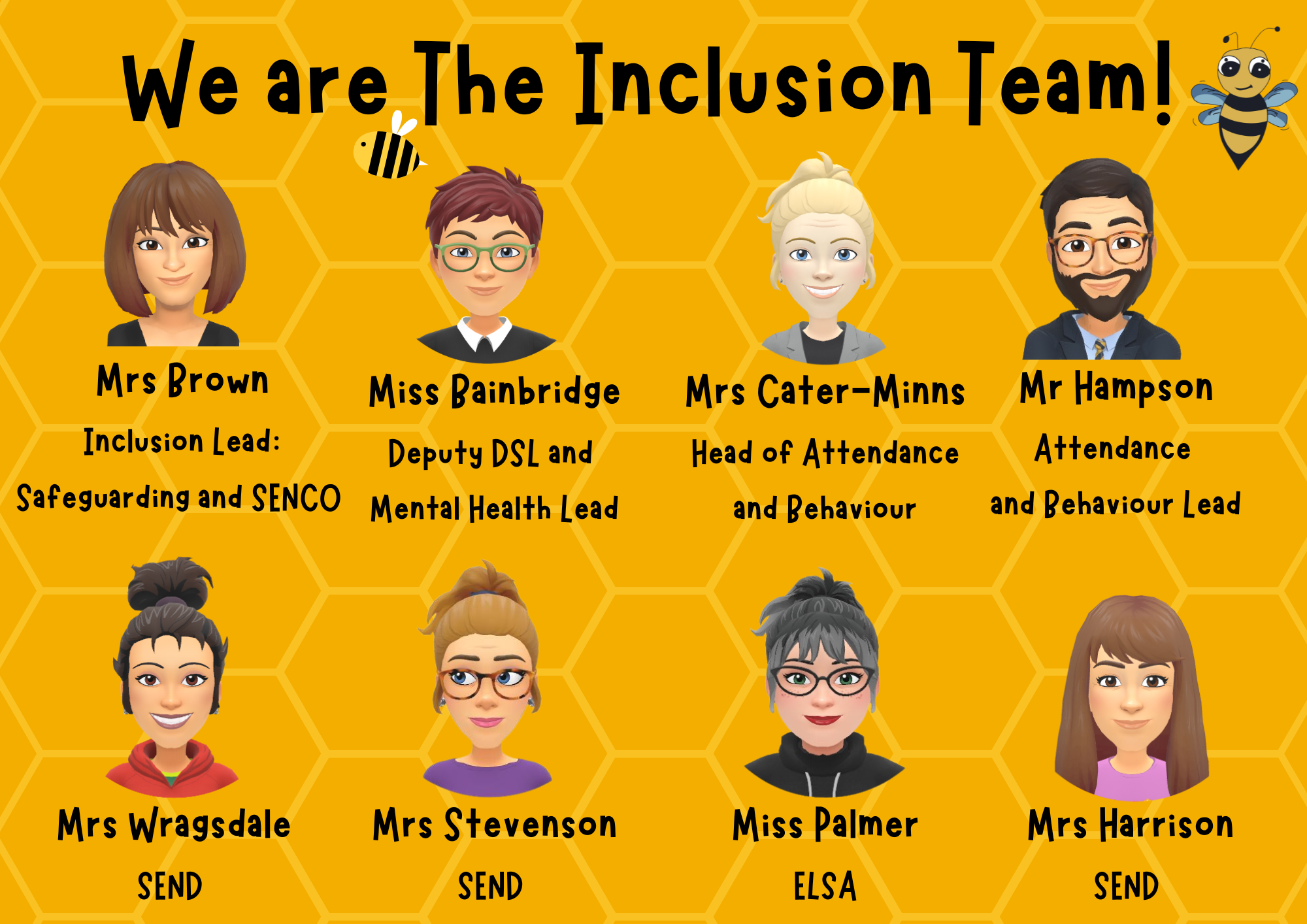
Mrs Brown (Vice Principal) is our Designated Safeguarding Lead and the Inclusion Lead.
Miss Bainbridge is the Deputy Safeguarding Lead and is responsible for the ELSA (Emotional Literacy Support Assistant) provision in school as well as behaviour for learning support
Mr Hampson is the Attendance Lead, who works hard to ensure all children attend and behaviour for learning support.
Miss Palmer is our ELSA worker and behaviour for learning support.
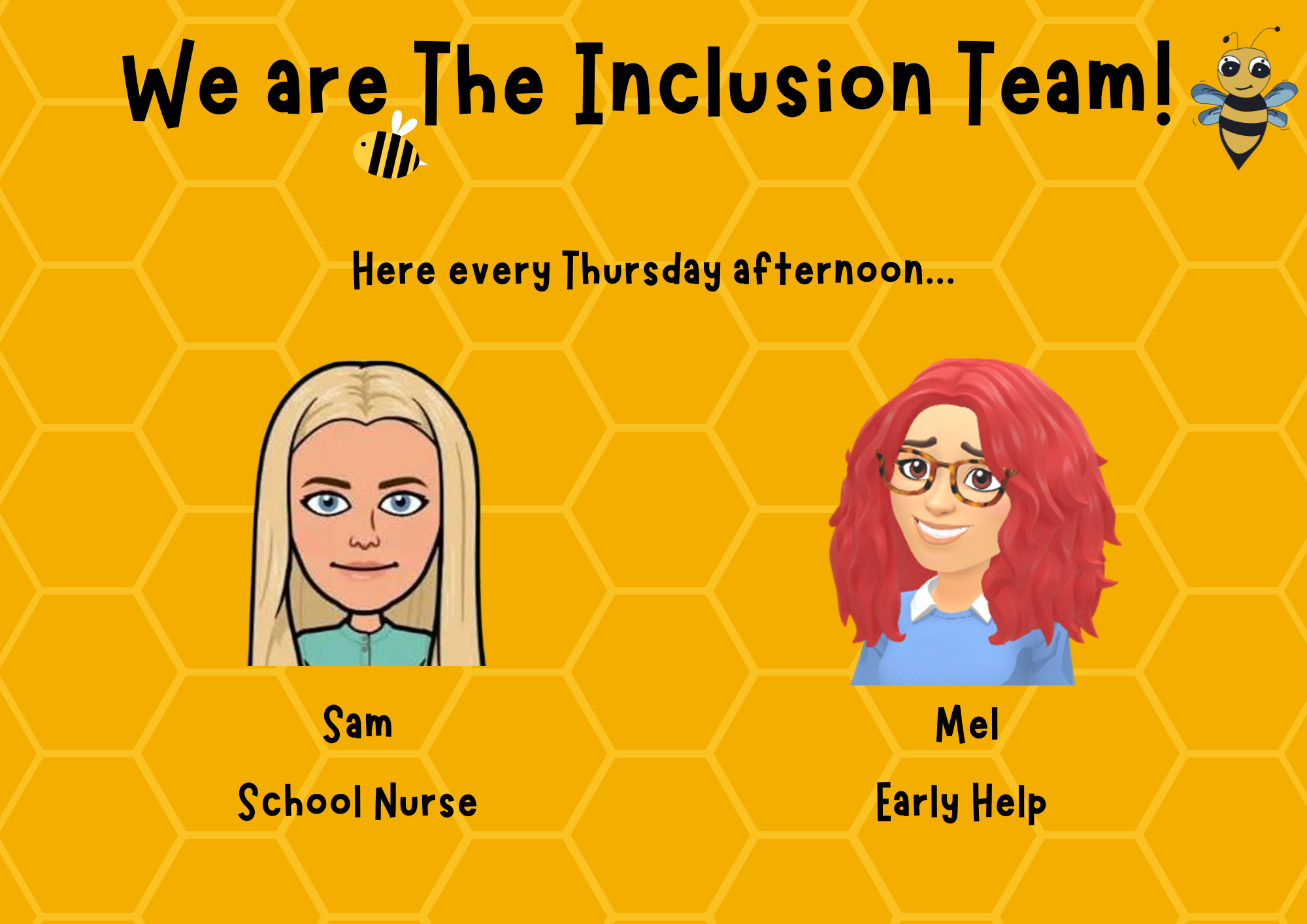
Samantha Stones (School Nurse) works within the team to support children with additional health needs or families who require support.
Please complete this form if you require support from the Inclusion Team
As a team we have created a document to help everyone understand what support is available, from the day to day to more specialist across our team.
- Communication and Interaction
- Cognition and Learning
- Social, Mental and Emotional Health
- Sensory and/or Physical Needs
The Government provides some advice for parents and carers about Special Educational Needs and Disabilities which you can access here https://www.gov.uk/children-with-special-educational-needs
Our local Hull SEND offer can be accessed here https://hullsendlocaloffer.org.uk/
View our SEND policies here
We are committed to ensuring that pupils with medical conditions are fully supported in school so that they can:
- Play a full and active role in school life;
- Access and enjoy the same opportunities at school as any other child, including school trips and physical education;
- Remain healthy and safe;
- Achieve their academic potential.
If a student has a medical need, they will have a Care Plan, which is compiled in consultation with parents and one of our medical assistants. The plan is discussed with all staff who are involved with the student and is added to the student’s profile, so staff can access it.
Staff receive regular medical training delivered by the school medical assistant and are aware of where they can access further information as required.
Where necessary and in agreement with parents, medicines are administered in school but only with signed parental consent and with medicines in the original packaging.
We welcome students with special educational needs or disabilities and support students across four teams. Students are organised into the teams during their transition from their previous school and it is based on the student’s main area of need. An Area of Need leader will monitor their academic progress and attendance whilst ensuring that the student’s needs were been met both through teaching and structured interventions.
Cognition and learning support
For students with specific learning difficulties such as dyslexia, or moderate learning difficulties that affect students in a range of cognitive areas.
Social, emotional and mental health support
For students who struggle to engage in the social aspects of school, or who find it hard to cope with challenging emotions. This will range from students needing short-term assistance during a turbulent time in their life, to students with a recognised condition such as ADD or ADHD.
Communication and interaction support
For students who have speech, language and communication needs, a specific language impairment or a range of communication difficulties. Students who find it difficult to interact with others are supported within this area.
Sensory and physical support
Students whose need is primarily sensory and, or physical have their support overseen by the area of need leader in this team. This team would support students with hearing or visual impairments as well as students with physical needs.